
"grown in"
32000 article(s) found

Four main varieties of raw beans grown in Kenya and their flavor characteristics
Raw bean varieties grown in Kenya, SL28 and Sl34. According to SL laboratory (according to botanists in SL laboratory, SL28 and SL34 are genetic variants. Among them, SL28 has a mixed pedigree of French missionaries, mochas and Yemens Tibica. The SL series is based on the ancient species of Mocha in Yemen and the bourbon species on the island of Reunion, and now accounts for the coffee production in Kenya.

The Best Coffee in Zaire Coffee is grown in the northeast of Zaire Coffee.
Boutique coffee has a strict grading system. Generally, raw beans are preserved in parchment coffee beans in the form of endocarp after processing, and the endocarp is removed before export. Go through a strict grading process to ensure the uniformity of quality. And it is very important to preserve the protection in the process of transportation, such as the control of temperature and humidity, the control of ventilation, avoiding odor adsorption and so on.

About the cultivation of coffee; why the coffee grown at high altitude is of high quality
About the cultivation of coffee; why coffee grown at high altitude is of high quality and the best coffee beans are usually strong and grow at an altitude of more than 4500 meters. The growth of these coffee beans is very slow, so the density of the beans is very high, and the gap in the middle of the beans should be curved. In contrast, coffee beans grown at low elevations usually have a lower density and a slight gap in the middle.

How are the top ten coffee in Ethiopia grown? Introduction to the planting model of coffee beans in Ethiopia
The six modes of growing coffee in Ethiopia are the most diversified in the world. People are usually divided into two large planting environments according to the degree of vegetation cover. The first type is the forest environment with shade trees. The second type is directly in the full sun environment, and these two types of environments derive six kinds of environment.

Relationship between shading planting of Coffee trees and Fine Coffee
As a knowledgeable consumer of coffee, you must have heard the description: this coffee is grown in shade. However, such a word that often appears in your coffee dictionary is sometimes quite deceptive. Coffee that is fairly traded, organic, hand-picked and specially roasted is often considered to be of better quality, isn't it? Maybe it is. It's going to be

Boutique Coffee beans: an introduction to "Shade planting" Coffee Shade Grown
If you pay close attention to it, some raw bean sacks will be marked with the word Shade Grown, and most of them will be shaded and planted in Chinese. The so-called shade planting refers to the most praised Arabica species among the coffee varieties. The output of this variety accounts for 60% to 70% of the statistics of global coffee production, and is considered to be a coffee with excellent flavor that can be tasted carefully. Relative to Robes.
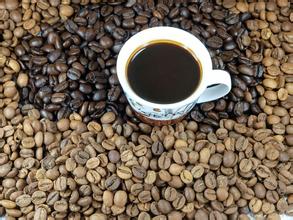
Introduction to the flavor description of coffee beans grown at altitude in the jadeite manor of Panama
Description of the flavor of coffee beans grown at an altitude in the Emerald Manor of Panama Panama has been among the best coffee producers in the world since three years ago, which has surprised countries that have been in the vanguard of developer production for many years. Panamanian coffee is mainly produced in the west near the Costa Rican border, producing the best washed coffee. Compared with the middle and low elevations
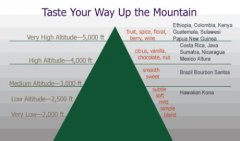
Effect of altitude on Coffee Flavor basic knowledge of Coffee
The influence of geographical location on the flavor of coffee beans is profound. All coffee grows in the tropics, and the altitude at which it grows has a profound effect on the taste of coffee. The tropical belt extends from 30 degrees north latitude to the equatorial regions of the southern mountains that produce the world's truly high-quality Arabica coffee. Central and South America, South Asia and some Pacific islands, south-central Africa is also the most important in the world.

Where was coffee first grown in China?
Where was coffee first grown in China? According to historical materials, in 1902, a French missionary, a priest named Tian Deneng in Chinese, introduced coffee trees into a village called Zhu Kula in Binchuan County, Dali, Yunnan Province, and successfully planted them. Since then, coffee trees have been introduced to all parts of Yunnan, and have achieved great success. Therefore, the ancestor of Chinese coffee species is in Zhu Kula village, but it is a pity that when
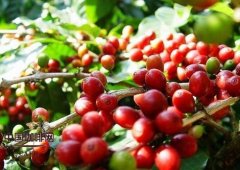
Unlike the coffee produced in Haiti, most of the coffee grown in the Dominican Republic has been washed.
Delicious, sweet, full-grained coffee the Dominican Republic (DominicanRepublic) is next to Haiti, and both own the island of Hispaniola (Hispaniola). Like its neighbours, the Dominican Republic had a history of revolution and poverty, but now it has democratic elections and the country is relatively stable. In the early 18th century, coffee began in Dominica

Panamanian Don Pepe Manor Coffee beans Cupid Manor Coffee grown in Panama
Boutique coffee (specialty coffee) is also called specialty coffee selection coffee. It refers to coffee made from a small number of raw beans with excellent taste grown in an ideal geographical environment. Depending on the special soil and climatic conditions in which they grow, they have outstanding flavor. After strict selection and classification, this kind of coffee is hard in texture, rich in taste and stylish.
Rainforest Coffee Coffee is grown in the obviously undulating, foggy mountainous areas of Guatemala.
Rainforest Cobn rainforest Rainforest Cobn is cloudy, rainy and cool all the year round. The vast majority of Koban coffee in the rainforest is grown in the obviously undulating and foggy mountains of the region and is deeply influenced by limestone and clay in the Atlantic basin. Koban has two seasons: the rainy season and the rainy season. Rainforest Koban Cup measuring characteristics (Rainforest Cobn)

The coffee grown in the Panamanian boutique coffee highlands is absolutely high-quality Panamanian coffee, Bana.
Panama coffee is smooth, light and sour, and its high-quality coffee beans are pure and distinctive. The first batch of coffee exported each year is shipped in November, and almost all high-quality coffee beans are shipped to France and Finland. The finest coffee is grown in the north of the country, near Costa Rica and the Pacific Ocean. Chiriqui province Bocket (Boque)
Coffee beans grown by small farmers in New Oriental, Guatemala
New Oriental (New Oriente): coffee in this area has been grown entirely by small farmers since the 1950s, and now every farmer in the mountains is a coffee production unit. This area, once the most remote and poorest part of Guatemala, is now alive and well. Rainy and cloudy, the ancient era of the New Oriental was a volcanic area, and the soil volcanic metamorphic rocks evolved.
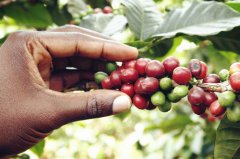
The coffee grown in the Panamanian coffee flavor highland is absolutely high quality.
Panama coffee is smooth, light and sour, and its high-quality coffee beans are pure and distinctive. The first batch of coffee exported each year is shipped in November, and almost all high-quality coffee beans are shipped to France and Finland. The finest coffee is grown in the north of the country, near Costa Rica and the Pacific Ocean. Bockett, Chiriqui province

Zambian boutique coffee is grown in individual coffee near its capital Lusaka.
Zambia began its history of coffee cultivation by introducing bourbon coffee from Kenya and Tanzania in 1950. Zambian coffee has a brightness similar to that of Kenyan coffee, but it is more subtle, complex and well-balanced. Zambian boutique coffee is grown near its capital Lusaka, and the main factor restricting the quality of its coffee is its low storage.

Peruvian coffee varieties, Peruvian coffee introduction
Following Cafe Review (Wechat official account vdailycom) found that the Beautiful Cafe opened a small shop of its own in Peru: coffee is high-quality and balanced and can be used for mixed drinks. Up to 98% of Peruvian coffee is grown in forest areas, and most producers are small farmers. Peru's finest coffee is produced in Chanchmayo, Cuzco, Norte and Puno (P

Peruvian Organic Coffee Historical Flavor and Taste characteristics of Peruvian Coffee grown in Peru
Peru: organic coffee flavor and taste characteristics: high quality and balanced, palatable acidity, can be used for mixed drinks, Peruvian coffee does not have a long history, but as a rising star, Peruvian coffee is gradually opening up its popularity and entering the international market. Peru is located in western South America, with a coastline of 2254 kilometers. The Andes runs from north to south, and the mountains account for 1% of the country's area. it belongs to the tropics.
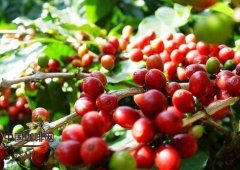
The coffee grown in the highlands is absolutely high quality, but the plantation coffee is not yet available in Panama.
Panama coffee is smooth, light and sour, and its high-quality coffee beans are pure and distinctive. The first batch of coffee exported each year is shipped in November, and almost all high-quality coffee beans are shipped to France and Finland. The finest coffee is grown in the north of the country, near Costa Rica and the Pacific Ocean. Bockett, Chiriqui province

Fine Coffee grown in Taiwan
Boutique coffee (specialty coffee) is also called specialty coffee selection coffee. It refers to coffee made from a small number of raw beans with excellent taste grown in an ideal geographical environment. Depending on the special soil and climatic conditions in which they grow, they have outstanding flavor. After strict selection and classification, this kind of coffee is hard in texture, rich in taste and stylish.